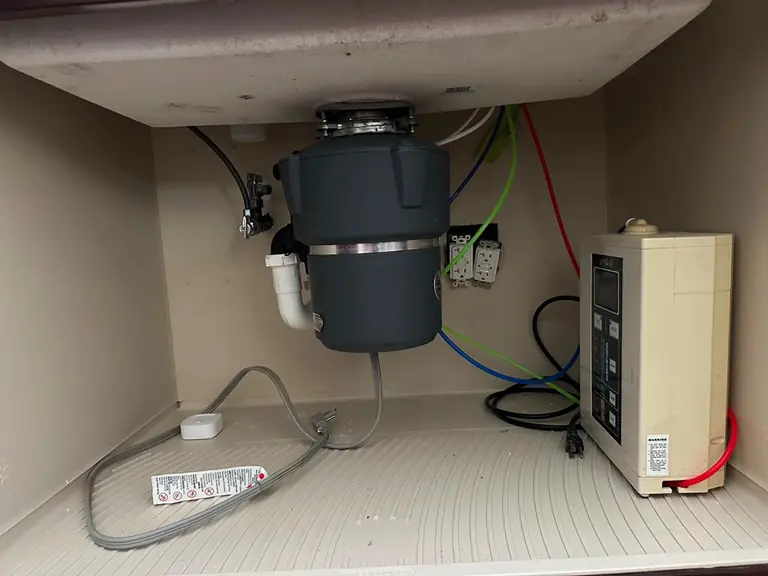
The garbage disposal may be the most misunderstood appliance in the kitchen. It isn't a shredder, and it definitely isn't a trash can — it's a grinding chamber designed for small amounts of soft food scraps chased with plenty of cold water. Use it that way and it lasts a decade. Use it as a second trash can and we'll be meeting sooner.
What the disposal handles well
Soft food scraps in small quantities: plate scrapings, soft vegetable pieces, small fruit remnants, cooked grains in moderation. The technique matters as much as the material: run cold water before, during, and for 15 seconds after grinding, and feed scraps gradually rather than packing the chamber and hitting the switch.
The absolute don'ts
Grease and oils — liquid going in, congealed pipe-lining plug downstream; pour cooled grease into a can for the trash instead. Fibrous items — celery, corn husks, onion skins, artichokes — whose strings wrap around the impellers. Starchy expanders — potato peels, rice, and pasta swell into paste that clogs the trap. Coffee grounds — they seem harmless but settle into dense sediment in the trap and line. Bones, fruit pits, and shells — the disposal isn't rated for them, whatever your uncle claims. And anything non-food: twist ties, produce stickers, flatware.
Why cold water, not hot
Hot water melts fats into liquid that flows a few feet down the line, cools, and congeals on the pipe walls. Cold water keeps fats semi-solid so the impellers break them into particles that travel through with the flow. It's counterintuitive and it matters.
Maintenance that actually works
Grind a tray of ice cubes monthly — it scours the chamber and impellers. Follow with citrus peels for odor if you like (the smell benefit is real, the cleaning benefit modest). Skip caustic drain chemicals entirely: they damage the seals. For persistent odors, the culprit is usually the splash guard — pull it and scrub the underside, where a biofilm colony has been quietly composting.
When it's the disposal vs. the drain
Humming without spinning means a jam — shut it off immediately and don't keep trying (that's how motors burn out). Leaks from the unit body mean replacement; leaks from connections are repairable. And if water backs up even with the disposal running fine, the problem is the drain line beyond it, not the appliance. Lumin Drain NJ repairs and replaces disposals and clears the kitchen lines they feed, everywhere in New Jersey: 929-662-1816.