
Low water pressure is a diagnosis that solves itself once you ask the right first question: is it one fixture, one area, or the whole house? Each answer points somewhere completely different. Here's the decision tree we run in our heads on every pressure call in New Jersey.
One fixture: look at the fixture
A single weak faucet is almost never a pipe problem. Unscrew the aerator — odds are it's packed with sediment or scale, and a rinse restores full flow. Weak showerheads usually have scaled spray channels (soak in vinegar). Pull-down kitchen faucets add a suspect: the spray head's internal check valve clogs. If the fixture is clean and flow is still weak, the fixture's shutoff valve may be partially closed or failing — common with old oval-handle stops.
One room or one floor: look at the branch
Weak pressure across a bathroom while the kitchen runs strong points to the branch line serving that area. In older NJ homes the classic culprit is galvanized steel piping, which closes itself off with internal rust over decades — a pipe that started at 3/4" may be flowing through a pencil-width channel. Upper-floor weakness that worsens when water runs downstairs is the same story with gravity's help. Branch-line galvanized is replaceable in sections; it's the beginning of a conversation about the rest of the system.
Whole house: look at the service, the valve, or the regulator
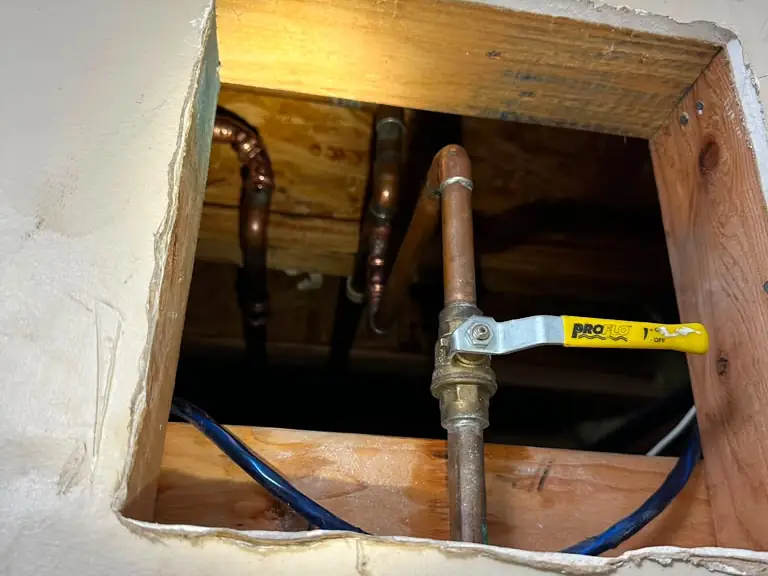
Every fixture weak, all the time: check that the main shutoff and the meter valve are fully open (both get bumped, and both fail internally). Homes with a pressure-reducing valve — the bell-shaped fitting near the meter — should suspect it after 10–15 years; failing PRVs cause low, creeping, or wildly variable pressure. If neighbors share your complaint, it's municipal. If the house is old and the service line from the street is original galvanized, the whole-house restriction may be underground — a job we diagnose with a pressure gauge at the front of the system.
Sudden drops: treat as urgent
Gradual decline over years suggests corrosion or a tiring PRV. A sudden drop suggests something happening now: a running leak (check the meter with all water off), a failed regulator, or in winter, ice forming in a line. Sudden pressure loss plus a spinning meter is a find-the-leak-today situation — water is going somewhere.
Lumin Drain NJ diagnoses and repairs pressure problems across New Jersey, from aerators to full repipes, with honest advice about which yours actually needs: 929-662-1816.