
A water heater pilot that dies repeatedly turns every morning shower into a gamble. The causes stack in a neat ladder from trivial to serious — and because this is gas equipment, the ladder has a clearly marked floor where DIY stops. Here's the climb, in the order a technician actually thinks through it.
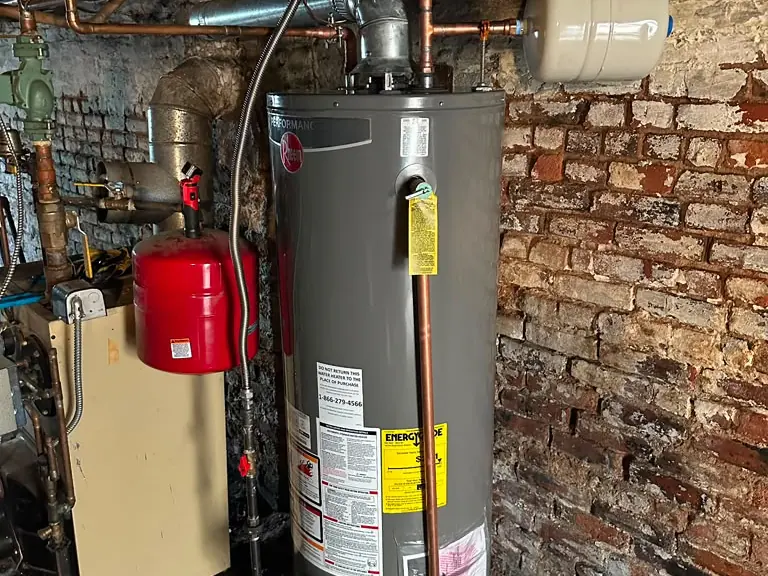
Rung 1: environment — draft and air
A pilot is a small flame in a drafty basement. Check the obvious: is the outer access cover in place (missing covers expose the flame to every door-slam gust), is a new draft reaching the heater (a recently added dryer vent, a propped door), and is the burner area starved or dusty? A heater in a closet needs its combustion air openings unblocked; a pilot that dies on windy days points at venting and draft rather than parts. These cost nothing to check and explain more pilot outages than pride admits.
Rung 2: the thermocouple — the usual verdict
The thermocouple is a safety sensor: heated by the pilot flame, it generates a tiny current that holds the gas valve open; if the flame dies, it cools and the gas shuts off. When the sensor itself fails — or drifts out of position, or its connection loosens — it stops holding the valve even with a healthy flame, and the pilot dies the moment you release the button, or minutes later. The tells: pilot lights fine but won't stay lit after releasing the control, or dies quietly at random. On older heaters it's a modest, replaceable part; on newer sealed-combustion units the assembly is more involved. Position matters too: the pilot flame should wrap the thermocouple's tip — a lazy, yellow, or misaimed flame can't heat it properly, which points back to...
Rung 3: the pilot orifice and flame quality
A healthy pilot burns blue and steady. A weak, yellow, or flickering flame usually means a partially clogged pilot orifice — dust, spider webs (genuinely — a classic), or corrosion restricting the tiny gas port. A weak flame both extinguishes easily and fails to heat the thermocouple, causing the same symptom from a different cause. Cleaning the orifice is delicate work on a gas assembly; at this rung, the confident-DIY population should be thinning.
The floor: gas valve, venting, and when to call
If the thermocouple is new and positioned, the flame healthy, the drafts eliminated — the remaining suspects are the gas control valve (failing valves stop holding regardless of thermocouple signal; replacement is a professional job, and on an older tank often the moment to price a new heater instead), gas supply pressure issues, or venting problems causing flame rollout or downdraft — the last two being carbon-monoxide-adjacent territory that belongs to professionals without exception. One absolute rule: if you ever smell gas, stop diagnosing, leave, and call the gas utility from outside. For everything short of that, Lumin Drain NJ diagnoses and repairs water heaters — or tells you honestly when the tank's age makes replacement the smarter spend — across New Jersey: 929-662-1816.