If we could put one message on a billboard over every highway in New Jersey, it would be this: wipes are not flushable, no matter what the package says. They are one of the most common causes of the severe sewer backups our emergency crews clear, and the damage they do is entirely preventable.
The problem with the word 'flushable'
'Flushable' only means the wipe will physically clear the toilet's trapway. Toilet paper is engineered to disintegrate within seconds of hitting water; wipes are engineered to stay intact while wet — that's their entire purpose. Once in your drain line, they behave like fabric, not paper.
How wipes actually clog a sewer line
Individual wipes snag on anything irregular inside the pipe: a rough joint, a root tendril, a bit of scale, an offset. The first snagged wipe catches the second, and they begin weaving together into a rope-like mass. Grease binds to the mass, other debris lodges in it, and within weeks a pipe can go from flowing to fully blocked.
We've pulled wipe masses out of NJ sewer lines that had to be extracted in sections. The photos we show homeowners afterward end the flushable-wipes debate in that household permanently.
Older NJ pipes make it worse
Much of New Jersey's housing stock drains through clay or cast-iron laterals with joints every few feet and decades of internal roughness. Every joint is a snag point. Homes with any root intrusion — which is most homes with mature trees — are especially vulnerable, because root tendrils are perfect wipe traps.
What belongs in the toilet
The rule plumbers live by: the three Ps — pee, poop, and (toilet) paper. Everything else goes in the trash, including baby wipes, 'flushable' wipes, paper towels, cotton products, dental floss, and feminine hygiene products. Paper towels deserve special mention: they're designed to be strong when wet and cause identical problems.
If your line is already clogged
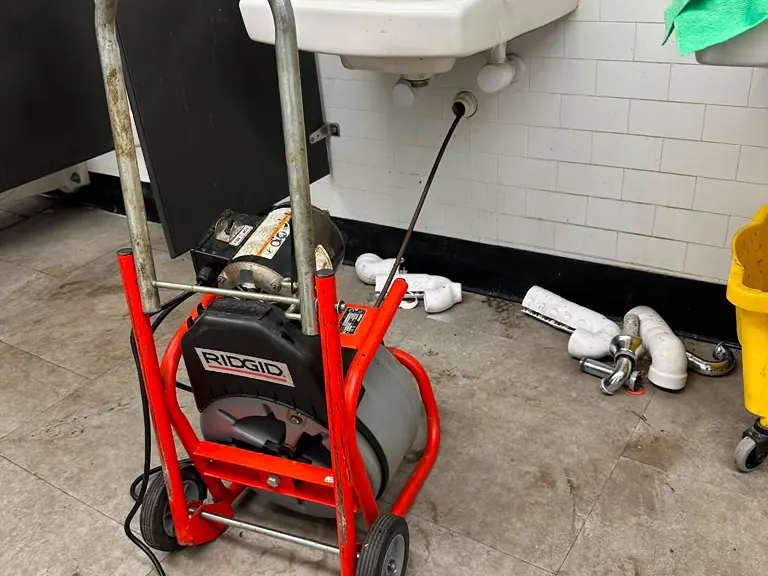
A wipe blockage rarely clears with a plunger because the mass is compressible — it absorbs the pressure and stays put. Professional removal with the right cable head extracts the mass rather than compacting it deeper. If wipes have been going down your toilets for months, a camera inspection is smart even after the clog clears, because remnants snagged along the line will seed the next blockage.
Lumin Drain NJ clears wipe blockages every week across New Jersey. If your toilet or main line is backing up, call 929-662-1816 — and put a small trash can in every bathroom.