
The kitchen sink is the hardest-working drain in the house, and it fails in slow motion: fine one month, sluggish the next, then one evening it's a basin of gray water contemplating you back. The cause is almost always the same substance — grease, bonded with food particles into a lining that narrows the pipe. Here's the escalation path, from tonight's free fix to knowing when to call.
Tonight: the trap and the tailpiece
Most slow-sink causes live within three feet of the basin. Place a bucket under the P-trap (the U-shaped bend under the sink), unthread its slip nuts by hand or with gentle channel-lock help, and inspect. You'll likely find a gray sludge of grease and coffee grounds, sometimes a utensil. Scrub the trap, check the tailpiece above it and the wall stub behind it with a flashlight, reassemble hand-tight plus a quarter turn, and run hot water to test the slip joints for drips.
If the trap was clean: the branch line
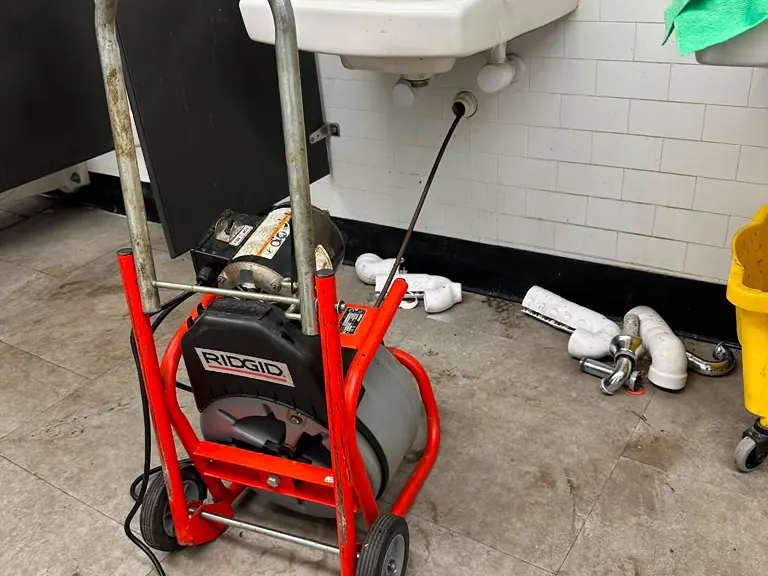
A clean trap plus a still-slow sink means the restriction is in the branch line inside the wall or floor — grease relining the pipe over years, often at the first elbow or a flat spot in the run. A hand auger through the wall stub can reach the first few feet. What not to do: chemical drain openers (they rarely clear grease plugs and make the line hazardous to service) and improvising with a garden hose (a pressurized backflow of gray water is a memorable kitchen event).
The habits that decide the future
No grease down the drain — ever. Pour cooled fats into a can; wipe greasy pans with paper towels before washing. Run cold water with the disposal, not hot (cold keeps fats solid enough to chop and flush; hot melts them into pipe lining). Keep a strainer in the basket. And once a month, an enzyme maintenance treatment digests the organic film chemically inert cleaners can't touch — genuinely useful prevention, though too slow for active clogs.
When it's ours
Call a pro when: the slow drain returns within weeks of a good trap cleaning (the branch line needs mechanical cleaning with the right cable and head); water backs up into both bowls or the dishwasher (a full stoppage forming downstream); or multiple fixtures are slow at once (a main-line issue wearing a kitchen-sink disguise). For chronic kitchen lines — especially long runs in ranches and homes with basement kitchens — professional cable cleaning or jetting restores the pipe's actual diameter rather than another temporary channel. Lumin Drain NJ cleans kitchen lines across New Jersey with same-day appointments: 929-662-1816.