
Ask a room of New Jersey homeowners who's on septic and several will honestly not be sure — especially recent transplants from denser towns. The answer changes your maintenance calendar, your renovation plans, and what that gurgling drain might mean. Here's the geography, the tells, and the practical differences.
The regional geography
Broadly: the dense eastern counties — Hudson, most of Bergen, Essex, Union, urban Passaic — run on municipal sewer. Move west and northwest into Morris, Sussex, Warren, and the wooded reaches of Passaic County, and septic systems become common to dominant, especially in lake communities and homes on larger lots. Plenty of exceptions exist in both directions; town centers out west often have sewer while their outskirts don't.
How to know for certain
Check your bills first: a quarterly sewer charge from the town or an authority means municipal sewer; its absence is suggestive but not proof. Physical tells for septic: a tank access lid or two in the yard, a slightly raised or lusher rectangular area (the drain field), no sewer cleanout heading toward the street. Your town's health department keeps septic records; your deed and closing documents usually state it. If you're buying, make the answer a condition of your inspection period — with a septic inspection if applicable, which is a different service than a sewer scope.
What changes if you're on septic
Maintenance becomes yours entirely: tank pumping every 2–5 years depending on household size and tank capacity, and protective habits matter more — no grease, no wipes (they're bad for sewers and fatal for septic), moderation with the garbage disposal, and caution with harsh chemicals that kill the tank's biology. Water discipline matters too: spreading laundry across the week instead of a Sunday marathon protects the drain field. And renovations adding bedrooms or bathrooms can trigger septic capacity review — a genuine planning consideration in western towns.
What stays the same (and where we fit)
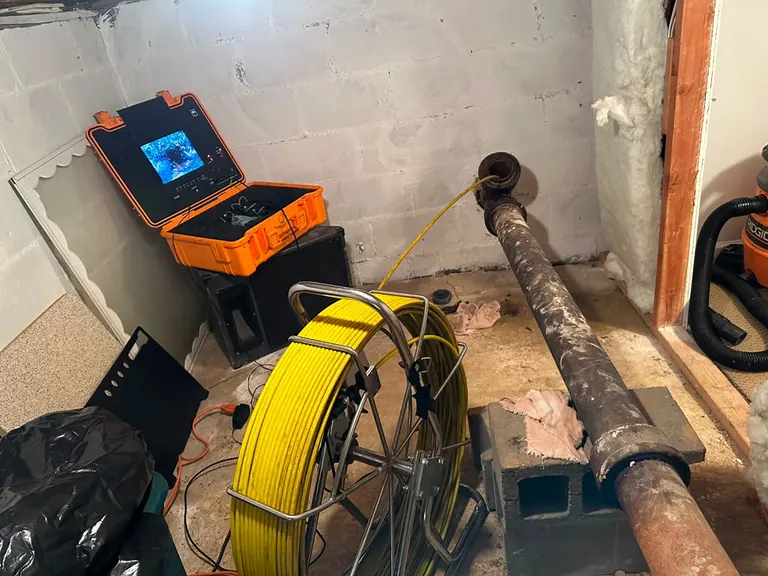
The plumbing inside the house — and the line running out to either destination — behaves identically: it clogs with the same wipes, invites the same roots, and develops the same bellies. Drain cleaning, camera inspections, and line repairs work the same on a septic lateral as a sewer lateral; we simply respect the tank (no chemical use, correct access) when the system is septic. Whichever side of the map you're on, Lumin Drain NJ services the drains and lines throughout New Jersey: 929-662-1816.