
'Trenchless' has become the most-marketed word in sewer repair — and it's genuinely transformative technology when it fits. But every method has an honest boundary where it stops being the right answer, and a contractor selling one method for every problem is selling their equipment, not your solution. Here's how the options actually compare.
Cured-in-place pipe lining (CIPP)
A resin-saturated felt or fiberglass sleeve is inverted or pulled through the existing pipe, inflated against its walls, and cured into a new, jointless pipe inside the old one. Best for: pipes that are structurally intact but leaking at joints, root-invaded, or corroded internally. Its limits: the liner follows the host pipe's shape — a belly stays a belly — and it slightly reduces diameter, needs sound pipe to bond against, and can't fix a collapse. Lining a pipe with geometry problems buys a smooth-walled version of the same problems.
Pipe bursting
A bursting head is winched through the old pipe, fracturing it outward while dragging new HDPE pipe into the void behind it. Best for: fully replacing a deteriorated line — even collapsed sections in some cases — while digging only entry and exit pits. It can even upsize the line. Its limits: needs launch and receiving pits, careful handling near other utilities, and enough of the old pipe path to follow.
Spot repair and open trench
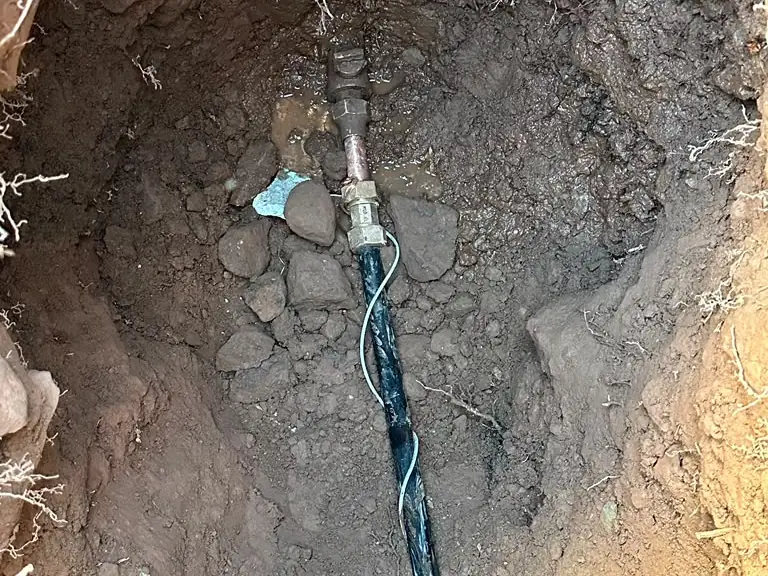
Not every problem needs a whole-pipe solution. A single failed joint or one root intrusion point, precisely located by camera and sonde, is often best fixed with a targeted excavation of a few feet — frequently the cheapest permanent repair on the menu. And full open-trench replacement still wins in specific cases: severely bellied lines needing new slope, shallow lines where digging is trivial, lines with multiple defective connections, or where the surface above is just lawn.
How to choose (and how to spot a bad recommendation)
The camera footage decides — not the sales pitch. Structural collapse rules out lining. A belly rules out lining as a fix for the belly. One defect suggests spot repair before any full-line method. Multiple defects in otherwise round pipe favor lining; a pipe at end-of-life favors bursting or trench. Insist on seeing your own footage with the defects explained, and get the repair scoped to the evidence. Lumin Drain NJ diagnoses first and recommends the method the pipe actually needs, with footage you keep, across New Jersey: 929-662-1816.